Are Gutter Guards Worth It in Wisconsin Winters?
A straight answer for Eau Claire homeowners: where gutter guards genuinely earn back their cost in saved cleanings, which types are worth the money, and how a quality install decides whether they actually deliver.
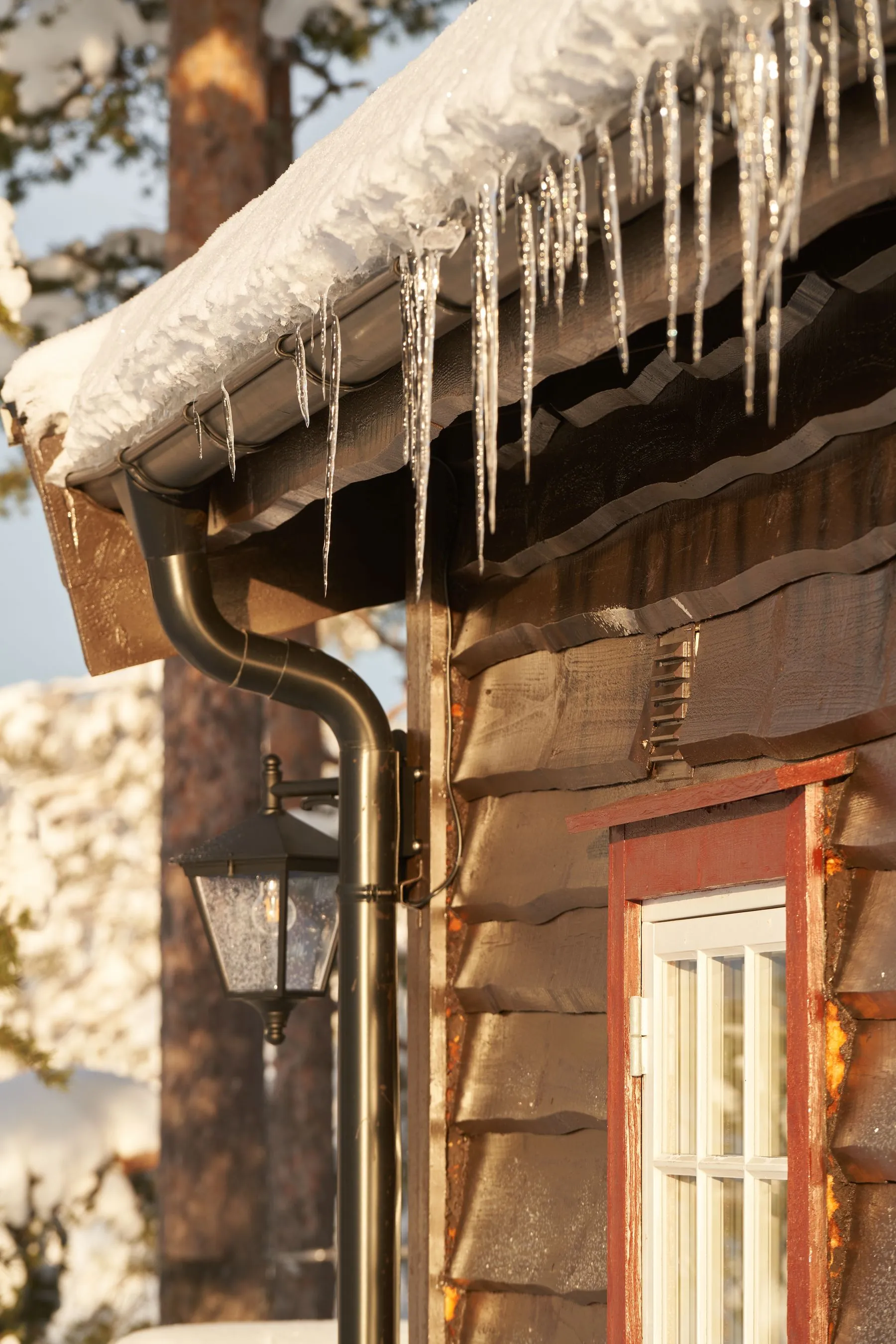
The honest answer: are gutter guards worth it?
Short version: for a lot of Eau Claire homes, yes, but not for the reason most sales pitches give. The real question is one of value: do guards save you enough cleaning, ladder time, and hassle to justify the up-front cost? For many homeowners the answer is yes, because a well-chosen guard on a clean install means your gutters keep draining with far less maintenance from you. What guards do not do is act as a cure-all, and a cheap guard slapped on a sagging system is money wasted. This guide covers what guards actually deliver, which types are worth paying for, what they cost against the cleanings they save, the truth about ice dams, and when plain gutter cleaning is simply the smarter call.
What gutter guards do, and what they don't
A gutter guard is a cover or insert that sits over the open top of your gutter. Its one real job is to keep leaves, twigs, seed pods, and roof grit out of the trough so water keeps flowing cleanly to the downspouts. When a gutter clogs, water backs up and dumps against your siding and foundation, the exact thing a working gutter system is supposed to prevent. A good guard protects that investment by keeping the channel open and the rotting-leaf sludge out.
Here is what guards genuinely deliver:
- Far fewer cleanings. Instead of clearing the trough two or three times a season, most guarded homes need only an occasional top-sweep or rinse.
- Steadier drainage in storms. A guard that stays clear keeps water moving instead of letting a leaf plug send it over the side during a downpour, and keeps moisture-holding debris off the metal.
- Fewer ladder trips. On two-story homes and steep lots, that reduced risk alone is worth a lot.
And here is what guards do not do, no matter what a flashy demo claims. They do not stop ice dams. They do not make your gutters self-cleaning forever; fine debris still collects and needs periodic attention. They do not repair sagging gutters, fix a bad slope, or replace failing seamless gutters already pulling from the fascia. A guard sits on top of the system you have; if it is undersized or poorly pitched, a cover will not fix that. Quality starts with the gutters underneath.
Do gutter guards work in heavy rain and Wisconsin snow?
Let's be specific. Do gutter guards work in heavy rain? A well-made, properly installed guard handles a normal summer cloudburst without trouble; water finds the mesh or screen openings and drops into the trough. The failure case is real, though: in a hard, wind-driven storm, water can sheet over the nose of a guard if the surface is partly clogged or the guard is pitched too flat. Reverse-curve guards that rely on surface tension are the most prone to this; once the curved lip gets dirty, water overshoots entirely. So the answer is yes, with two conditions: choose a guard that drains by gravity through openings, and keep its surface reasonably clean.
Winter is a different animal, and it is worth being honest about. Snow does not flow, it sits, so a guard does nothing to the snow itself; in a deep freeze your gutters are not doing much anyway. Where a guard helps is at the thaws, when meltwater needs a clear path. A trough kept free of last fall's leaves means that water reaches the downspout instead of pooling and refreezing overnight. So guards do earn their keep across the seasons here, but by keeping the channel open, not by doing anything to snow and ice themselves.
The ice-dam question: guards are not the fix
If there is one myth worth killing, it is that gutter guards prevent ice dams. They do not, and understanding why will save you money. An ice dam forms because heat leaks out of your living space into the attic, warms the underside of the roof, and melts the snow sitting on it. That meltwater runs down to the cold overhang at the eave, where there is no warm air below, and refreezes into a ridge of ice. More meltwater backs up behind that ridge, works under the shingles, and leaks into the house. The whole process happens on the roof, above the gutter, driven by attic temperature, not by anything in the trough.
Because the cause is heat loss, the cure is up in the attic: air sealing ceiling penetrations, adding insulation to keep the roof deck cold, and improving ventilation so the roof stays an even temperature. Guards sit below all of that and cannot touch it. In fact, a flat guard gives ice one more surface to build on, and a heavy ice load can bend the brackets just as it would on an open gutter. So treat the two problems separately: solve ice dams in the attic, and judge guards purely on the debris-and-drainage job they are built for.
Guard types and which ones suit our climate
Not all guards are equal, and the differences are where your money goes. Here are the three you'll realistically choose among in the Chippewa Valley.
Screen guards
These are perforated metal or rigid plastic panels with relatively large openings that snap or screw over the gutter. They are the budget option and they do block big debris like leaves and twigs. The downside: the openings are wide enough to let pine needles, maple helicopters, and shingle grit through, so near conifers they clog underneath over time, and plastic versions can grow brittle and crack in hard cold. Screens are a reasonable pick for a low-debris lot on a tight budget, less so under heavy tree cover.
Micro-mesh guards
Micro-mesh uses a fine stainless or aluminum mesh over a rigid frame, with openings small enough to block even pine needles and grit while still letting water through. For most Eau Claire homes, and especially lots with pines or maples, this is the type that performs best over the long haul and the one most worth paying up for. The mesh sheds the small debris that defeats screens, and quality units drain well in heavy rain. They cost more and need an occasional rinse so a film of pollen does not blind the mesh, but they are the closest thing to set-and-mostly-forget. We fit guards from trusted manufacturers, not the cheapest panel on the shelf.
Reverse-curve guards
Reverse-curve, sometimes called surface-tension, guards are a solid hood with a curved lip; water clings around the curve into a thin slot while debris is meant to fall off the front. They can work, but they are the type we are most cautious about here. In heavy, wind-driven rain the water can overshoot the curve, and once the nose gets dirty or iced, performance drops. They are also the most visible from the ground. For most Chippewa Valley homes, a good micro-mesh is the safer bet.
Whichever style you lean toward, the install matters as much as the product. A guard set at the wrong pitch, or laid over gutters that already sag, will disappoint regardless of brand, which is exactly why careful fitting is where the value lives. For options matched to your roof, see our gutter guards page.
Cost versus the cleanings they save
Now the money. In the Chippewa Valley, installed gutter guards generally run roughly 7 to 30 dollars per linear foot, with basic screens at the low end and quality micro-mesh at the high end. A typical single-story Eau Claire home with 150 to 200 feet of gutter often lands between 1,500 and 4,500 dollars total, depending on guard type, roof height, and roofline complexity. These are ranges to set expectations; your free on-site estimate gives you a written, itemized price with no pressure to decide on the spot.
Weigh that against what you would otherwise spend. A professional gutter cleaning here typically runs in the low-to-mid hundreds per visit, and a home under trees may need two or three visits a year. Guards do not erase that cost, since you'll still want an occasional check, but they shrink it. The honest math: on a heavily treed lot with several cleanings a year, quality guards can pay for themselves in a handful of years; on a home with almost no overhanging trees and one easy cleaning a season, the payback stretches out much longer.
When guards are worth it, and when cleaning is enough
Here is how to decide. Lean toward gutter guards when:
- Your home is surrounded by trees, especially pines, maples, or oaks that drop needles and seeds.
- It's a two-story or steep-roof home where every cleaning means a tall, risky ladder.
- You're already paying for two or more professional cleanings a year, or simply want fewer chores at the change of seasons.
Lean toward sticking with regular cleaning when:
- You have few or no trees overhanging the roof and the gutters barely fill in a year.
- The gutters are single-story and safe to reach.
- Your real problem is sagging, leaking, or undersized gutters; fix those first, since a guard on a failing system just hides the issue.
And remember the line that runs through this whole guide: whatever you choose for debris, handle ice dams separately, up in the attic. Guards are a good answer to one specific problem, leaves and drainage, and a poor answer to one they were never built to solve. Want a clear-eyed recommendation for your own roof? Our local Eau Claire crews offer free on-site estimates with no high-pressure sales and a written price range you can think over. Call 715-705-8272 or reach out through the contact page, and we'll tell you honestly whether guards or a simple cleaning schedule makes more sense.
Get a free estimate
Get Your Free Eau Claire Estimate
Tell us what your home needs and we'll set up a free on-site visit with a written price range — no obligation, no pressure.
Prefer to talk? Call 715-705-8272.
Frequently Asked Questions
Do gutter guards work in heavy rain?
Good ones do, within limits. Micro-mesh and quality screens let a typical downpour pass through while blocking leaves and grit. In a hard, wind-driven storm, water can sheet over any guard if the openings are partly clogged or the guard is pitched wrong, so installation quality matters as much as the product. Cheap reverse-curve and fine-mesh units are the most likely to shed water in heavy rain.
Do gutter guards stop ice dams?
No. Ice dams form when heat escaping through the roof melts snow that refreezes at the cold eave. That is an attic insulation and ventilation problem, not a gutter problem. Guards keep the trough clear of debris, but they cannot stop ice from building on the roof edge. Some guards actually trap a layer of ice on top. Solve ice dams with air sealing, insulation, and ventilation, not with guards.
How much do gutter guards cost in Eau Claire?
Most Chippewa Valley homes land in the range of roughly 7 to 30 dollars per linear foot installed, depending on the guard type and your roofline. A typical single-story home with 150 to 200 feet of gutter often falls somewhere between 1,500 and 4,500 dollars. Micro-mesh sits at the higher end; basic screens at the lower end. We give you a written, itemized range after a free on-site look.
Will I still need to clean my gutters with guards installed?
Usually yes, just far less often. Fine grit, shingle granules, pollen, and seed pods can still collect on top of a guard or sift through over the years. Most guarded systems need a light rinse or top-sweep every couple of years instead of two or three full cleanings a season. Plan on the occasional check, especially after autumn leaf drop.
Are gutter guards worth it for a home with pine trees?
Often the most, but pick the guard carefully. Pine needles and maple seeds are small enough to thread through wide screens and even some perforated guards, so micro-mesh is usually the better choice near conifers. If your Eau Claire lot is ringed with pines and you are climbing a ladder several times a year, well-chosen micro-mesh guards tend to pay back faster than they do on a low-debris lot.
Free Estimates Across Eau Claire & the Chippewa Valley
Serving Eau Claire, Altoona, Chippewa Falls, Menomonie, Lake Hallie and surrounding communities. Honest written pricing, no pressure.