Vinyl Siding Installation in Eau Claire
A clean, finished exterior installed right the first time, with no painting to chase, low maintenance, and an honest written price before any work starts.
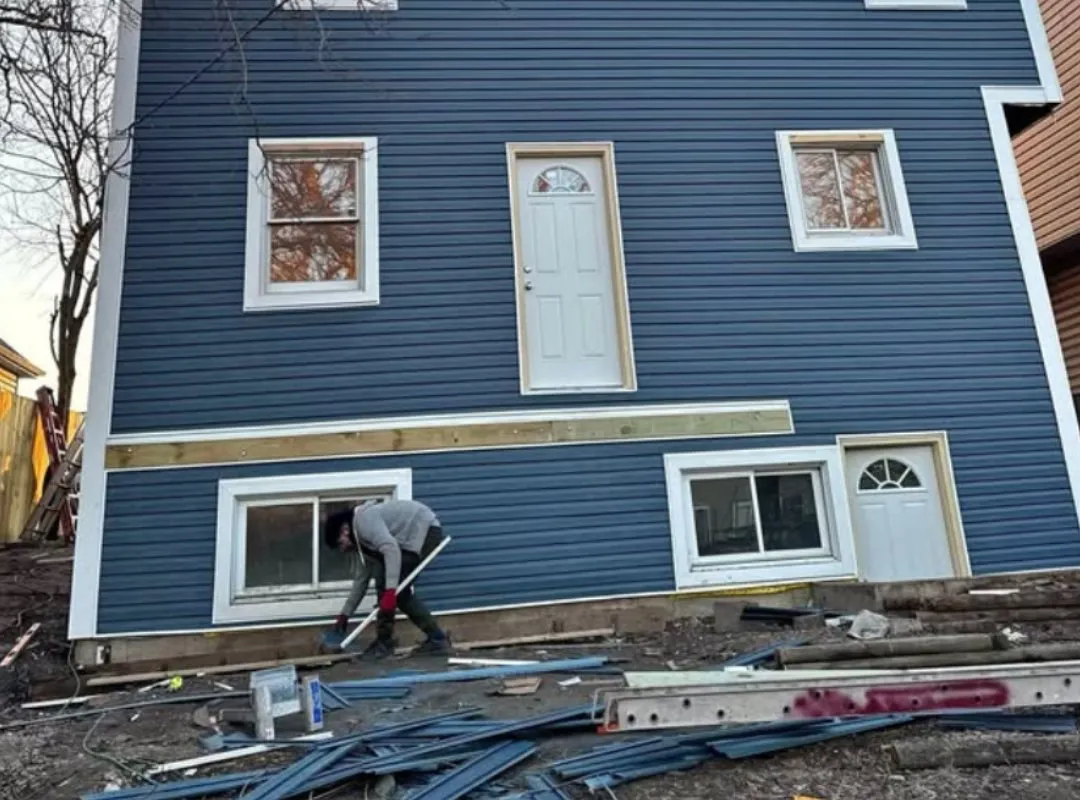
Why Vinyl Is the Most Popular Siding in the Chippewa Valley
Drive through any neighborhood in Eau Claire, Altoona, or Chippewa Falls and you will see why vinyl siding is the most common exterior on the block. It is the best-value option we install: it costs the least up front, it never needs painting, and a quality modern panel installed with care gives a home a crisp, finished look for years. For a homeowner who wants real curb appeal without a premium price, it is hard to beat.
Vinyl is made from PVC, molded into long panels with a baked-in color that runs all the way through the material rather than sitting on the surface as paint. That single fact drives most of its appeal. Because the color is not a coating, a scratch does not expose a different shade underneath, and there is no paint film to peel, blister, or fade off the way it does on wood. With a wide range of colors and profiles to choose from, you pick the look you want and then rinse it once a year to keep it sharp.
What makes it a smart fit for our climate
- No painting, ever. Through-color vinyl skips the repaint-and-touch-up cycle entirely, so the finish you choose is the finish that stays.
- It will not rot or feed insects. PVC gives carpenter ants and moisture nothing to work with, unlike untreated wood.
- It sheds water. Lapped, interlocking panels carry rain and runoff down the wall instead of trapping it.
- It is forgiving on older homes. Many Eau Claire houses have walls that are not perfectly straight, and a careful crew makes vinyl lay clean over them.
Insulated vs Standard Vinyl: R-Value Matters in Wisconsin
This is the one upgrade decision worth understanding plainly. Standard, or hollow-back, vinyl is a single molded panel with an air gap behind it. Insulated vinyl is the same panel with rigid foam permanently fused to the back, filling that gap and following the contour of the board. The difference shows up in three places: comfort, the flatness of the finished wall, and how solid the siding feels.
On the energy side, the gain comes from interrupting a heat-loss path called thermal bridging. Your wall studs are wood, and wood conducts heat far faster than the insulation batts between them, so even a well-built wall leaks heat in vertical stripes right where each stud sits. Insulated vinyl lays a continuous blanket of foam across the whole wall, studs included, which evens out the wall temperature over a long heating season.
What the foam actually buys you
- Added R-value. Insulated vinyl typically adds about R-2 to R-3.5 of continuous insulation. It will not replace wall insulation, but as a layer that covers the studs too, it punches above that number.
- A stiffer, flatter wall. The foam backing supports the panel, so it resists denting and lies flatter, with fewer waves than hollow vinyl can show in low sun.
- Quieter rooms. The same foam dampens road noise, wind, and rain on the wall.
- Better impact resistance. Backed panels are less prone to chipping when something strikes them, including on a cold day.
Standard vinyl is the right call when the budget is tight or the wall behind it is already well insulated. Insulated vinyl earns its higher price on homes with hollow or under-insulated walls, a long heating season, or owners planning to stay put for years. We will tell you honestly which one your home actually needs rather than upselling the foam by default.
What Vinyl Siding Costs in Eau Claire
Vinyl sits at the budget-friendly end of the siding ladder, well below fiber cement and engineered wood, which is a big part of its appeal. As an honest planning range, installed vinyl siding in the Eau Claire area generally runs about $4 to $9 per square foot, which puts most mid-size homes around $8,000 to $20,000. A small ranch can come in under that band; a large two-story with insulated panels and a full trim package can run above it.
What moves your number
- Panel grade and thickness. Builder-grade vinyl is thinner and cheaper; premium and insulated panels cost more but look better and hold their shape longer.
- Insulated vs standard. The foam backing adds roughly a dollar or two per square foot to the material.
- Tear-off and repairs. Removing old siding and fixing any rotted sheathing underneath adds cost but is worth doing right.
- Home size and wall complexity. More square footage, dormers, gables, and corners mean more material and labor.
- Trim, soffit, and fascia. Wrapping windows, corners, and the eaves in coordinated trim raises the price and the finished look together.
Because so much depends on your specific home, the only honest number is one measured on site. Our estimates are Free On-Site Estimates, written and itemized, with no high-pressure sales. If you want to see how vinyl stacks up against the pricier options before you call, our guide to the best siding for Wisconsin homes walks through the trade-offs.
Does Vinyl Crack in the Cold? An Honest Answer
Here is the straight version, because it is a fair question. Vinyl does become more brittle as the temperature drops, and in a deep cold stretch a sharp impact can chip or crack a panel that would have flexed and bounced back in summer. That is a real property of the material and we will not pretend otherwise.
What we can tell you is that cracking almost never comes from cold by itself. The far more common cause is installation error, specifically nailing the panels too tight. Vinyl expands and contracts a surprising amount across the seasons, often more than half an inch over a long wall, so panels are designed to float on their nails and slide as they move. Get the fastening right and the material does its job.
How correct installation prevents it
- Loose nailing. Each nail is driven so the panel can still shift side to side by hand. Pin it tight and the panel cannot expand, so it buckles in heat and cracks in the cold.
- Proper gaps at trim. Panel ends are cut short of the channels, leaving room to grow without binding.
- Quality panel thickness. A thicker premium or insulated panel resists impact far better than thin builder-grade stock.
In other words, vinyl that fails usually tells you more about the crew than the product. Installed correctly by Local Eau Claire crews who fasten it the way the manufacturer specifies, quality vinyl holds up year after year.
Our Process for Vinyl Siding in Eau Claire
A vinyl job is only as good as what is behind it, so we treat the whole wall as a system, not just the panels. We start with a free on-site visit to measure, look at the existing siding and sheathing, and talk through standard versus insulated panels, colors, and profiles. You get a written, itemized estimate with an honest range and no pressure.
On install day we tear off the old siding, inspect the sheathing, and repair any rot before anything new goes up. We confirm the weather-resistive barrier and flashing are sound, because keeping water from getting behind the wall is what makes the finish last. Then the panels go on loose-nailed to manufacturer spec, with trim wrapping the corners, windows, and eaves so the exterior reads as one clean, finished system.
Siding and water management work together. Clogged or undersized gutters dump water straight down the wall and behind the lower courses, so we always check that the roofline drains cleanly. Pairing fresh vinyl with working seamless gutters protects everything you just paid for. If your eaves are tired, new soffit and fascia finishes the look at the same time.
If you want the most durable, highest-end option instead, compare vinyl against James Hardie fiber cement siding, and our broader siding installation and replacement page covers how any product goes on. Ready to see what vinyl costs on your home? Reach out for a free on-site estimate and we will measure, walk your options, and hand you an honest written price range.
How Our Free Estimate Works
You reach out
Call or send a few details about your home and what you need.
We come measure
On-site, we assess the work, take measurements, and answer your questions.
You get a written price
An itemized estimate with no hidden fees — you decide on your timeline.
Related services
Get Your Free Eau Claire Estimate
Tell us what your home needs and we'll set up a free on-site visit with a written price range — no obligation, no pressure.
Prefer to talk? Call 715-705-8272.
Frequently Asked Questions
How much does vinyl siding cost in Eau Claire?
Installed vinyl siding typically runs about $4 to $9 per square foot in the Eau Claire area, or roughly $8,000 to $20,000 for a mid-size home. Insulated vinyl, tear-off, and home size move the number, so we give a free written estimate.
Does vinyl siding crack in cold weather?
Quality vinyl rarely cracks from cold alone, but it does get more brittle below zero, so a hard impact in January can chip it. Most cracking traces to nailing too tight. Proper loose-nailing that lets panels expand is what keeps vinyl sound for the long haul.
Is insulated vinyl siding worth it in Wisconsin?
For many Eau Claire homes, yes. Insulated vinyl adds roughly R-2 to R-3.5 of continuous foam behind the panel, trims thermal bridging through the studs, stiffens the wall, and dampens noise. It costs more up front but pays back over a long heating season.
How long does vinyl siding last?
Vinyl siding commonly lasts 20 to 40 years, and many manufacturers back it with a limited lifetime, transferable warranty. Lifespan comes down to correct fastening, quality panel thickness, and keeping the wall behind it dry and well drained.
Vinyl vs fiber cement: which should I pick?
Pick vinyl if up-front cost and zero painting are the priorities; pick fiber cement for maximum durability, a higher-end look, and a fire rating. Both perform well here. We measure your home and lay out honest ranges so you can weigh the trade-off.
Free Estimates Across Eau Claire & the Chippewa Valley
Serving Eau Claire, Altoona, Chippewa Falls, Menomonie, Lake Hallie and surrounding communities. Honest written pricing, no pressure.