James Hardie & Fiber Cement Siding in Eau Claire
Premium fiber cement installed right, the look of painted wood, a clean finish, and quality materials that hold their color and stay put for decades.
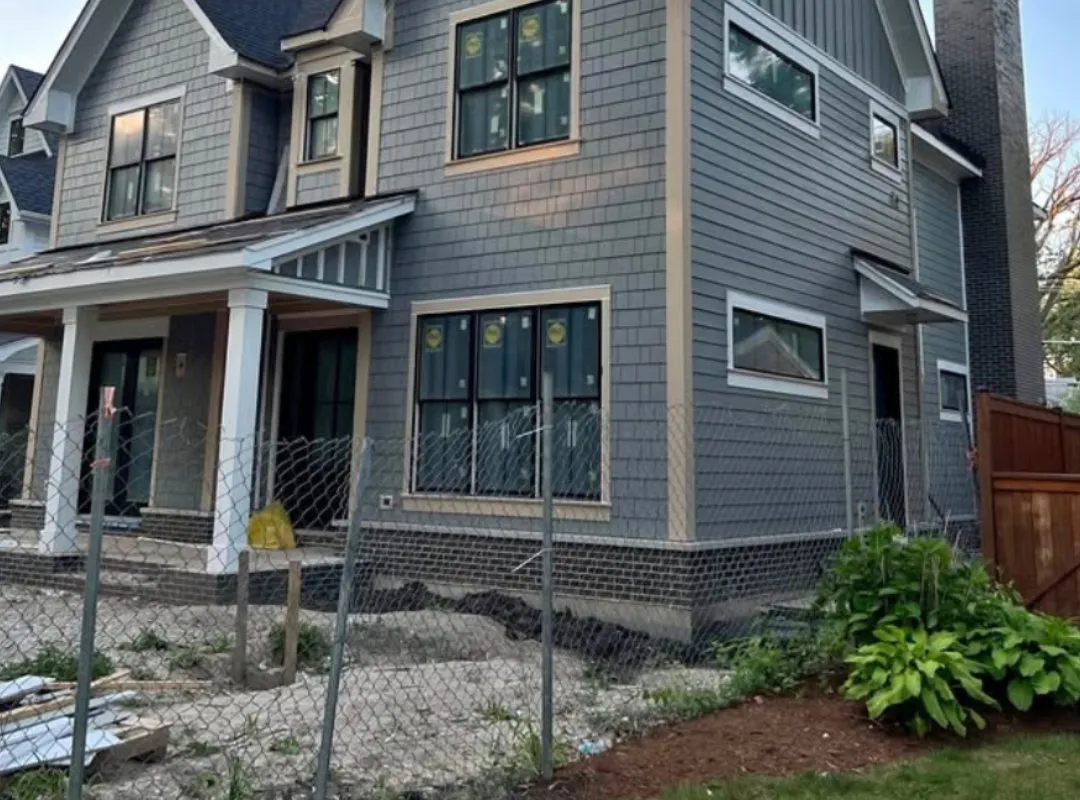
What Is Fiber Cement Siding (James Hardie)?
James Hardie fiber cement siding in Eau Claire is a dense, board-style cladding made from Portland cement, sand, and cellulose fiber. Those ingredients are mixed, pressed, cured, and finished, which gives the board the look of crisp painted wood with almost none of wood's weaknesses. It does not rot, it will not warp in the heat, and insects have nothing to eat. Because it is cement-based, fiber cement is also non-combustible, which is why it carries a Class A fire rating. For a lot of homeowners, that combination of a high-end look and a low-maintenance material is the whole appeal.
What sets James Hardie apart from generic fiber cement is the company's HardieZone system. Boards are engineered for specific climates, and the version we install for homes across Eau Claire, Altoona, Chippewa Falls, and Menomonie is the one matched to ours. You also get factory color through the ColorPlus line or a primed board ready for site paint, so the finish is baked in at the plant rather than brushed on at the last minute. Either way, the result is a clean, even face that lifts a home's curb appeal the day the last board goes on.
A Quality Board, Installed Right: Rot, Fire, and Impact Resistance
The reason fiber cement earns its place in the premium tier is simple: it is a genuinely tough material that keeps looking good. The board resists rot and insects because there is nothing in it for either to attack, it is non-combustible with a Class A fire rating, and a dense cured panel takes a knock from a stray ball or a ladder far better than thin composite. Most important to how a home looks year after year, the finish holds its color instead of fading and peeling the way field-painted wood does.
What makes the board hold up
- Rot and pest resistance. No wood for moisture to swell or insects to chew, so the board stays sound and the wall stays straight.
- Non-combustible body. Cement does not feed fire, a quiet bonus when homes sit close together in older Eau Claire neighborhoods.
- Dimensional stability. It barely moves with temperature, so it does not buckle or sag the way some products do, and it shrugs off freeze-thaw because dense fiber cement absorbs very little water in the first place.
- Color that stays put. Factory ColorPlus finish bonds to a stable surface, so it resists the fading and chalking that show up on painted wood after a few seasons.
None of that durability matters if the wall behind the board is wrong, and this is where the install crew earns its keep. Correct flashing, a proper weather-resistive barrier, and the right gaps at trim and butt joints are what let a quality board actually last. Siding and water management work together, too: clogged or undersized gutters dump water down the wall, so pairing solid siding with working seamless gutters protects the whole system. Get the prep and the details right, and the board does the rest.
HardiePlank vs HardiePanel and Color & Finish Options
James Hardie is a family of products, not a single board. Two profiles cover most Eau Claire homes, and picking between them is mostly about the look you want.
HardiePlank lap siding
HardiePlank is the classic horizontal lap board, the profile most people picture when they think of fiber cement. It comes in smooth and cedarmill (woodgrain) textures and in several reveal widths, so you can match a tight Craftsman look or a wider, more modern line. For a traditional Wisconsin home, this is usually the starting point.
HardiePanel vertical siding
HardiePanel is a large sheet used for vertical board-and-batten and modern flush looks. Paired with battens, it gives that farmhouse or contemporary face that is popular on newer builds and additions around the valley. Many homes mix the two, lap on the main walls and panel-and-batten on gables or accent sections.
Trim, soffit, and color
- HardieTrim boards frame windows, doors, and corners so the whole exterior reads as one finished system rather than mismatched parts.
- HardieSoffit coordinates the eaves and overhangs; if yours are tired, it pairs naturally with new soffit and fascia work.
- ColorPlus Technology bakes the finish on at the factory in a wide range of colors, with a finish warranty and far better fade resistance than a field paint job.
- Primed for paint boards let you pick any custom color, which makes sense if you want an exact match to existing trim or HOA-approved palette.
What James Hardie Siding Costs in Eau Claire
Fiber cement sits in the premium tier, above vinyl and roughly alongside or just under engineered wood depending on the job. As an honest planning range, installed James Hardie siding in the Eau Claire area generally runs about $11 to $18 per square foot, which lands most mid-size homes somewhere around $20,000 to $45,000. A small ranch can come in under that band; a large two-story with lots of trim and gables can run above it.
What moves your number
- Home size and wall complexity — more square footage, dormers, and corners mean more material and labor.
- Tear-off and repairs — removing old siding and fixing any rotted sheathing underneath adds cost but is worth doing right.
- ColorPlus vs primed — factory color costs more up front but skips a separate paint bill.
- Trim, soffit, and fascia — a full HardieTrim package raises the price and the finished look together.
- Profile mix — combining HardiePlank and HardiePanel with battens adds labor.
Because so much depends on your specific home, the only honest number is one measured on site. Our estimates are Free On-Site Estimates, written and itemized, with no high-pressure sales. For a deeper breakdown before you call, the Eau Claire siding cost guide walks through how the pieces add up.
James Hardie vs LP SmartSide vs Vinyl: A Quick Compare
There is no single best siding, only the best fit for your home, budget, and how long you plan to stay. Here is how the three options we install stack up.
James Hardie fiber cement
The most rigid and the only non-combustible option here. It resists rot, insects, and impact very well and holds its factory color for decades. It is heavier and pricier to install, so it is the choice when you want maximum durability and a high-end look.
LP SmartSide engineered wood
A treated engineered-wood product that is lighter, easier to handle on uneven framing, and warmer in feel than cement. It holds up well, takes an impact, and often costs a touch less installed. See the full picture on LP SmartSide engineered wood siding.
Vinyl siding
The budget-friendly, lowest-maintenance option. Modern vinyl siding wears well and never needs paint, though it will not match the substance or fire rating of fiber cement. It is the smart pick when up-front cost is the priority.
If you are weighing all three, our guide to the best siding for Wisconsin homes compares them head to head, and our broader siding installation and replacement page covers how any of these go on. Whichever you lean toward, the install crew matters more than the brand. Hardie in particular is unforgiving of shortcuts, so correct fastening, spacing, and flashing by Local Eau Claire crews is what turns a premium product into a wall that lasts.
Ready to see what fits your home and budget? Reach out for a free on-site estimate and we will measure, talk through your options, and hand you an honest written price range with no pressure to decide on the spot.
How Our Free Estimate Works
You reach out
Call or send a few details about your home and what you need.
We come measure
On-site, we assess the work, take measurements, and answer your questions.
You get a written price
An itemized estimate with no hidden fees — you decide on your timeline.
Related services
Get Your Free Eau Claire Estimate
Tell us what your home needs and we'll set up a free on-site visit with a written price range — no obligation, no pressure.
Prefer to talk? Call 715-705-8272.
Frequently Asked Questions
How much does James Hardie siding cost in Eau Claire?
Installed James Hardie fiber cement typically runs about $11 to $18 per square foot in the Eau Claire area, or roughly $20,000 to $45,000 for a mid-size home. Tear-off, trim, and home size move the number, so we give a free written estimate.
Is fiber cement siding worth it in Wisconsin?
For most Chippewa Valley homes, yes. Fiber cement does not rot, warp, or feed insects, and it holds its color and finish far longer than wood. The higher upfront cost is offset by decades of low upkeep and a premium look that holds up.
James Hardie vs LP SmartSide: which is better?
Both perform well in Wisconsin. James Hardie is fiber cement, fully non-combustible and very rigid; LP SmartSide is engineered wood, lighter and a bit more forgiving on rough framing. We help you weigh cost, look, and your home before you decide.
Does Hardie board crack in cold weather?
Properly installed Hardie board does not crack from cold alone. Most cracking traces back to nailing too tight, missing gaps, or bad flashing. Following James Hardie spacing and fastening specs is what keeps it sound through sub-zero January.
How long does fiber cement siding last?
Fiber cement commonly lasts 30 to 50 years, and James Hardie backs the board with a 30-year limited product warranty. Lifespan comes down to correct installation and keeping caulk and trim joints maintained over time.
Free Estimates Across Eau Claire & the Chippewa Valley
Serving Eau Claire, Altoona, Chippewa Falls, Menomonie, Lake Hallie and surrounding communities. Honest written pricing, no pressure.