How Much Does It Cost to Replace Siding on a House in Eau Claire?
A plain-spoken look at what siding replacement actually costs in the Chippewa Valley, the real factors that move the number up or down, and what a clear written estimate should spell out so you can compare quotes fairly.
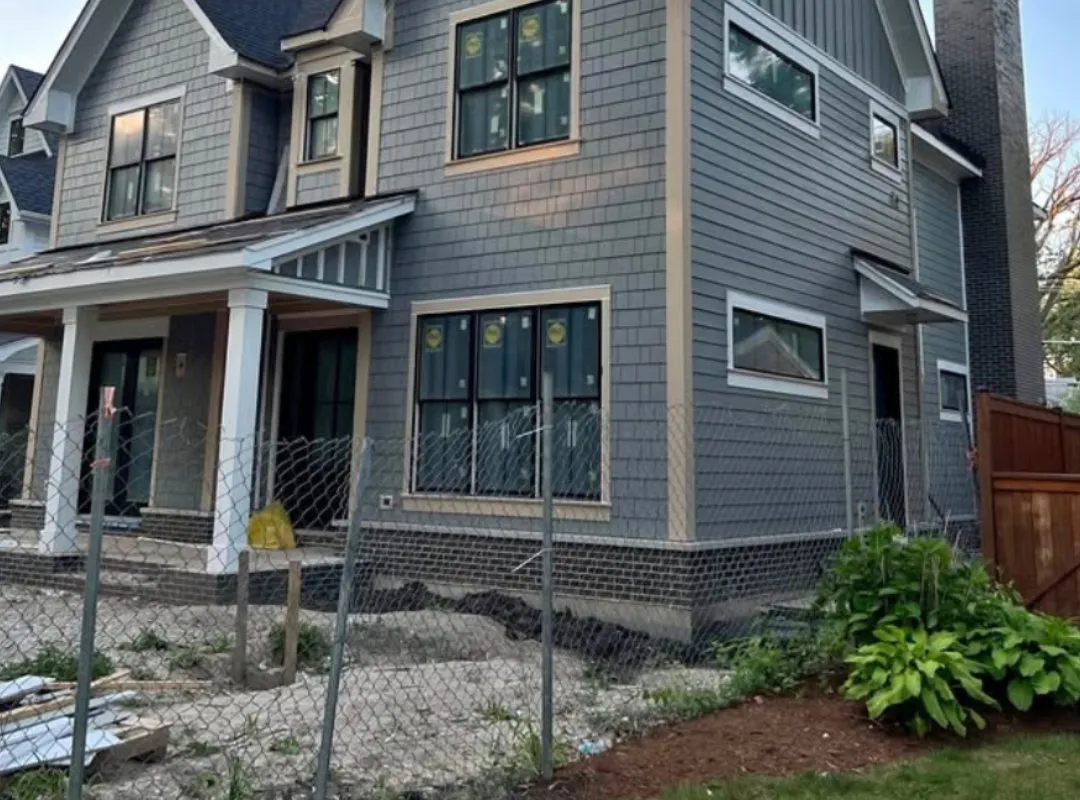
What Siding Costs for a House in Eau Claire
If you are trying to figure out how much it costs to replace siding on a house in the Eau Claire area, the honest answer is a range, not a single price. For most homes in the Chippewa Valley, full siding replacement lands somewhere between roughly 12,000 and 35,000 dollars. That spread is wide because two houses the same size can need very different work, and the material you pick changes the number a lot. This guide walks through what actually drives the cost, gives real ranges by material, and explains what a written estimate should spell out so you can compare quotes fairly. Every number here is a planning range. Your free on-site estimate is the only way to get a firm written price for your home.
What you are really buying is a finished result that holds up: panels that sit straight and tight, trim that wraps cleanly around windows and corners, and fasteners and flashing set so the whole wall sheds water. Done well, new siding sharpens your home's curb appeal and protects the structure behind it for decades. Done in a hurry, it can look fine on day one and start telegraphing problems within a few seasons. The price difference between those two outcomes is mostly prep, materials, and the care taken on the install, not anything a national calculator can see, which is why a quote for your home can run above a generic online figure and still be the better long-term value.
It also helps to think of siding as a system, not just the panels you see from the street. Behind the visible material sits sheathing, a weather barrier, and flashing at every window and penetration, and each of those layers has a job to do in keeping water out of your walls. A siding price is really the price of installing that whole system correctly, and that is why two quotes for the same house can differ by thousands of dollars. The cheaper one is sometimes leaving out a layer you cannot see until it fails. The rest of this guide breaks down where the money actually goes so you can tell a thorough quote from a thin one.
What Drives the Price Up or Down
Siding is priced largely by the square foot of wall, but several factors move your final number. Understanding them helps you read an estimate and know why one quote differs from another.
- Square footage of wall. This is the biggest driver. More wall means more material and more labor. A compact ranch has far less surface area than a tall, cut-up two-story with lots of gables, so footprint alone does not tell the whole story.
- Material choice. Vinyl, James Hardie fiber cement, and LP SmartSide engineered wood sit at different price points. The jump from vinyl to fiber cement is the single biggest swing most homeowners face. We break the ranges down below.
- Tear-off and disposal. Removing old siding, hauling it away, and disposing of it is real labor. Older Eau Claire homes sometimes have layers of material, which adds to the removal time.
- Trim, corners, and detail work. Window and door surrounds, corner posts, soffit, and fascia all add material and time. A home with many windows and architectural details costs more to wrap cleanly than a plain box.
- Number of stories and access. A two- or three-story home needs more staging, scaffolding, and careful work at height, which raises labor compared with a single-story house.
- Prep and repair. Once the old siding comes off, we can see the sheathing and house wrap. If past moisture or hidden leaks have caused soft spots, that wood needs replacing before new siding goes on. This is the part nobody can fully price until the walls are open, which is why a good estimate notes how repairs are handled.
- Install quality. Careful prep, correct fastening, and crisp trim work take time, and that time is part of the price. A clean install is what separates siding that looks sharp and lasts from a fast job that shows its corners early.
A thorough siding installation and replacement project also includes a weather barrier, flashing at windows and penetrations, and sometimes added insulation. Those steps are not glamorous, but they are what protect the structure behind your walls and keep the finished look intact for the long haul.
Cost Ranges by Material
Here is where the money goes. The ranges below are installed prices, meaning material plus labor, and they assume standard tear-off and normal prep. They are planning figures for the Eau Claire market, not quotes.
Vinyl Siding
Vinyl is the most budget-friendly option and remains popular across the Chippewa Valley for good reason: it never needs painting, comes in a wide range of colors and profiles, and modern insulated vinyl adds a little extra to how a wall holds heat. Installed, quality vinyl commonly runs about 4 to 9 dollars per square foot. On a typical 1,800 to 2,200 square foot two-story home, that often works out to roughly 12,000 to 22,000 dollars depending on trim and prep. Insulated vinyl and premium profiles land at the higher end. See more on vinyl siding for how the different grades compare.
James Hardie Fiber Cement
James Hardie fiber cement is a heavier, rigid product made of cement, sand, and cellulose fiber. It resists hail, will not feed a fire the way wood can, and stands up well to freeze-thaw because it does not absorb and hold water the way some materials do. That durability comes with more material cost and more labor, since the boards are heavy and require careful cutting and fastening. Installed, fiber cement commonly runs about 8 to 16 dollars per square foot, which on the same average home often means roughly 22,000 to 38,000 dollars. Hardie also comes pre-finished in a baked-on color, which holds up to UV and weather longer than field-applied paint. Learn more about James Hardie and fiber cement siding and where it makes sense.
LP SmartSide Engineered Wood
LP SmartSide is engineered wood treated to resist moisture, fungal decay, and insects. It splits the difference between vinyl and fiber cement: it gives you the warm, real-wood look and deep texture many homeowners want, it is lighter and faster to install than fiber cement, and it holds up well to impact and our cold. Installed, LP SmartSide commonly runs about 7 to 14 dollars per square foot, often landing around 18,000 to 32,000 dollars on a typical home. It does need to be painted and periodically repainted, which is a maintenance cost to factor in over the years. Read more about LP SmartSide engineered wood siding to see if the look and feel fit your home.
Why such different ranges? You are paying for durability, the quality of the finish, and the weight and difficulty of installing the material cleanly. There is no single right answer. A modest rental might be best served by quality vinyl, while a home you plan to keep for decades may justify the longer life and richer look of fiber cement or engineered wood. The right pick is the one that matches your home, your budget, and how long you plan to keep it.
Tear-Off vs. Over-Cladding
One way some contractors trim the up-front price is to side over the existing material instead of tearing it off. The lower number is tempting, but it is rarely the smarter long-term move. Over-cladding hides whatever is already happening under the old siding. If moisture has gotten behind the wall, covering it up can trap water against the sheathing, and a wall that cannot dry out will rot.
Tearing off the old siding lets us see and fix problems before they get buried. We can inspect the sheathing, replace any soft wood, install a fresh weather barrier, and flash the windows and penetrations correctly so water drains out instead of soaking in. That careful prep is the difference between siding that lasts decades and looks sharp the whole time and siding that fails early. There are cases where over-cladding is reasonable, and we will tell you honestly during the free estimate whether your home is a candidate. We will not push the more expensive path just to push it.
What a Written Estimate Should Include
Comparing siding quotes only works when they are itemized. A vague one-line price is impossible to compare fairly against a detailed one. A clear written estimate from us spells out the things that actually affect cost and quality:
- The specific product, line, and color so you know exactly what you are getting.
- Square footage being covered and the labor to install it.
- Tear-off and disposal of the old material.
- House wrap or weather barrier and flashing at windows, doors, and penetrations.
- Trim, corner posts, and J-channel, with soffit and fascia noted separately if they are part of the job.
- How hidden repairs are handled if soft sheathing turns up once the walls are open.
- A clear total with no hidden fees, given in writing.
We provide free on-site estimates, and the price comes to you in writing with no high-pressure sales. If a quote leaves big questions unanswered, that is a sign to ask more before you sign. While you are planning, it is worth thinking about soffit and fascia at the same time, since it is far easier to address those while the crew and staging are already on site.
Financing and Insurance Notes
Siding replacement is a meaningful investment, and a few practical points are worth keeping in mind. If your siding was damaged by a specific event like a hail or windstorm, your homeowner's policy may cover part of the work, so it is worth reviewing your coverage and documenting the damage before you start. Coverage varies by policy and situation, so check directly with your insurer. Many homeowners also spread the cost over time through financing options, which can make a more durable material affordable on a monthly basis. We are happy to talk through the numbers during your free estimate so you can plan around what works for your household.
One more practical tip for comparing bids: do not just compare the bottom-line totals. Line up the products, the prep, and the weather barrier side by side. If one estimate is noticeably cheaper, find out which of those items it left out or downgraded. A lower price that skips proper flashing or reuses a worn-out house wrap is not actually a better deal, because that is exactly the work that decides whether the install lasts and keeps looking good.
Whatever direction you lean, the next step is the same: get a free on-site measurement and an honest written estimate so the planning ranges in this guide turn into a real number for your home. As local Eau Claire crews serving Eau Claire, Altoona, Chippewa Falls, Menomonie, Lake Hallie, and the surrounding towns, we are glad to walk your property, explain the trade-offs in plain language, and let you decide on your own timeline. There is no obligation and no high-pressure sales, just a clear written price you can plan around.
Get a free estimate
Get Your Free Eau Claire Estimate
Tell us what your home needs and we'll set up a free on-site visit with a written price range — no obligation, no pressure.
Prefer to talk? Call 715-705-8272.
Frequently Asked Questions
How much does it cost to replace siding on an average Eau Claire house?
For a typical 1,800 to 2,200 square foot two-story home in the Eau Claire area, full siding replacement commonly lands somewhere between 12,000 and 35,000 dollars depending on the material you choose, how much tear-off and repair the walls need, and the trim details. Vinyl sits at the lower end; James Hardie fiber cement and LP SmartSide engineered wood sit higher. The only way to know your real number is a free on-site measurement and a written estimate.
Why is siding more expensive here than the national averages I see online?
National calculators average out the parts that actually move the price: your exact wall square footage, the material you pick, how much tear-off and hidden repair the walls need, the trim and accessory work, and the labor to install it cleanly. They also assume an install with proper house wrap and flashing, which is the work that makes siding last. A real written estimate prices your home, not an average house, which is why a quote here can land above a generic calculator and still be the better long-term value.
Is it cheaper to side over my existing siding instead of tearing it off?
Sometimes the up-front number is lower, but it is rarely the better long-term value. Over-cladding hides whatever moisture damage is already under the old siding and can trap water against the sheathing. We generally recommend tear-off so we can inspect the walls, replace any soft sheathing, and install a proper weather barrier and flashing, which is what makes a siding job last. We will tell you honestly during the free estimate whether your home is a candidate for over-cladding.
Does new siding cost include the trim, soffit, and fascia?
It depends on the estimate, which is exactly why you want everything itemized. Corner posts, J-channel, window and door trim, and house wrap are usually part of a siding quote. Soffit and fascia are often a separate line item because not every home needs them replaced at the same time. A clear written estimate spells out what is included so there are no surprises.
How long should new siding last in Wisconsin?
Installation quality matters as much as the material. When it is installed correctly with proper flashing and ventilation, quality vinyl commonly lasts 20 to 40 years, and James Hardie fiber cement and LP SmartSide engineered wood are built to last several decades with periodic maintenance. Poor flashing or trapped moisture will shorten the life of any product, which is why we focus on careful prep, clean fastening, and getting the water management right the first time.
Free Estimates Across Eau Claire & the Chippewa Valley
Serving Eau Claire, Altoona, Chippewa Falls, Menomonie, Lake Hallie and surrounding communities. Honest written pricing, no pressure.